
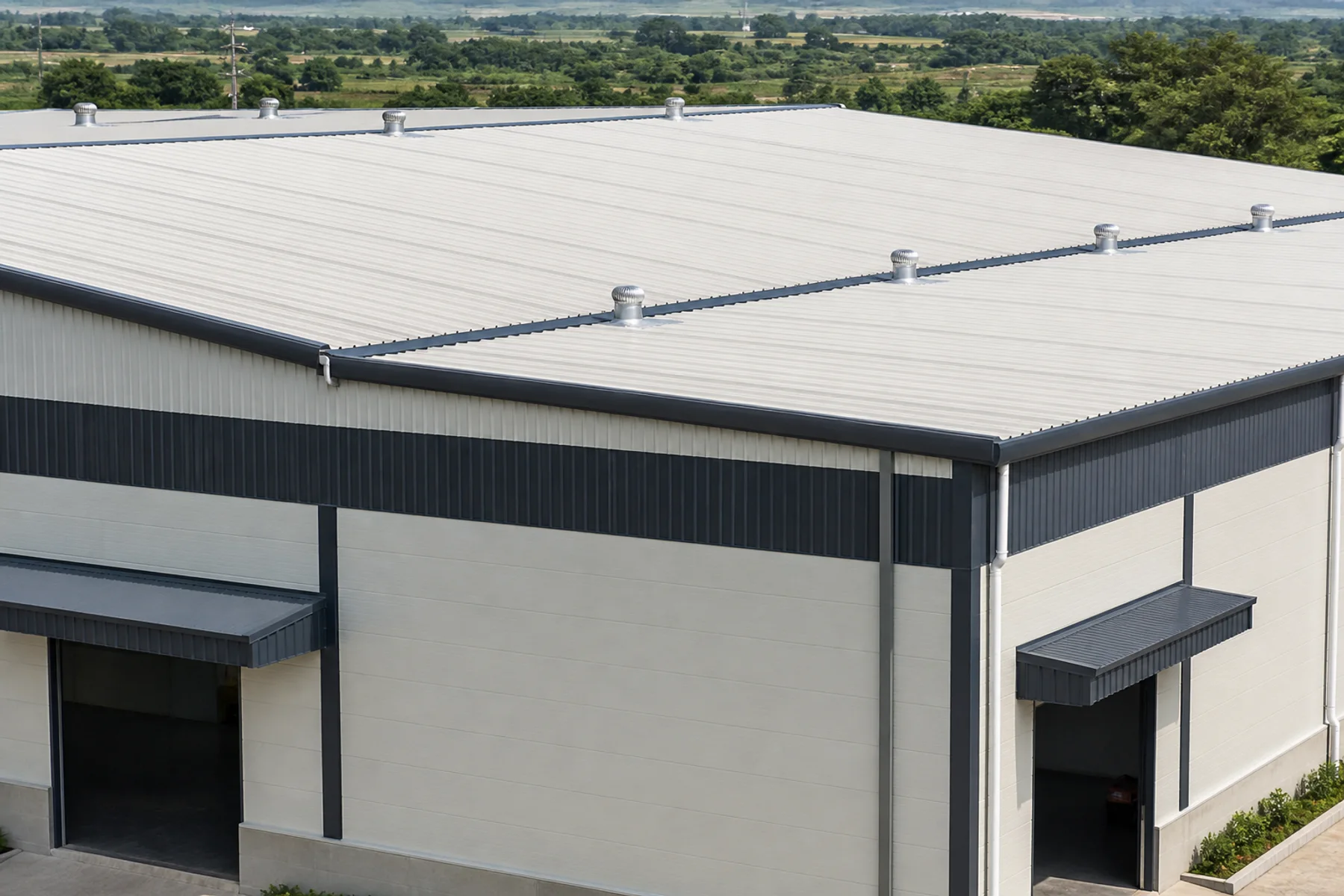
The price per square foot is only the first comparison
A colour-coated metal sheet and an insulated sandwich panel can cover the same structure, but they do different jobs. A single-skin sheet is primarily the weather skin. An insulated panel combines outer and inner facings with an insulating core, so it can influence interior temperature, condensation control, acoustics and the appearance of the ceiling.
The correct choice starts with building use. A naturally ventilated storage shed may not need the same thermal performance as a food facility, office, production floor, resort or air-conditioned commercial space. Comparing only the initial material rate can therefore create a false economy.
- Hours of occupancy and internal heat generation
- Air-conditioning or temperature-control requirement
- Noise sensitivity during rain
- Hygiene, washability and interior-finish expectations
- Expected building life and future operating cost
Where single-skin metal roofing makes sense
Profiled PPGI, PPGL, galvalume, aluminium or galvanised sheets are efficient for many factories, warehouses, canopies, utility buildings and extensions. They are comparatively light, available in project-specific lengths and can be combined with separate insulation, vapour control or ventilation when required.
Performance still depends on the complete assembly. Sheet thickness, coating, profile, effective cover, support spacing, fastener type, roof slope, flashing details and corrosion exposure must work together. A premium sheet cannot compensate for incorrect laps, over-driven fasteners or poorly planned drainage.
Where insulated panels earn their place
PUF, PIR or mineral-wool sandwich panels are often considered where temperature, condensation, clean internal finish or faster enclosure matter. Their interlocking joints and factory-controlled composition can simplify the roof build-up, but core type, thickness, fire requirement and vapour-control strategy must be selected for the actual use.
Panel spans and fastener frequency require manufacturer and structural confirmation. Junctions at eaves, ridges, rooflights, walls and penetrations must preserve both weather tightness and the thermal or air barrier.
Build a better quotation brief
Share the roof plan or measured sloping dimensions, purlin spacing, building use, location, preferred internal finish and whether the building is air-conditioned. ReZa can then compare the appropriate systems and prepare a more useful quotation.
- Ask for effective cover—not only overall width
- Confirm the proposed core and thickness
- Include flashings, closures, sealants and fasteners
- Discuss rooflights and ventilation before finalising the layout
- Verify structure and wind uplift separately
This guide consolidates ReZa Smart Build’s product catalogue, installation knowledge and legacy company material. Product attributes and availability must be reconfirmed at quotation stage.
View the related legacy ReZa listing ↗