
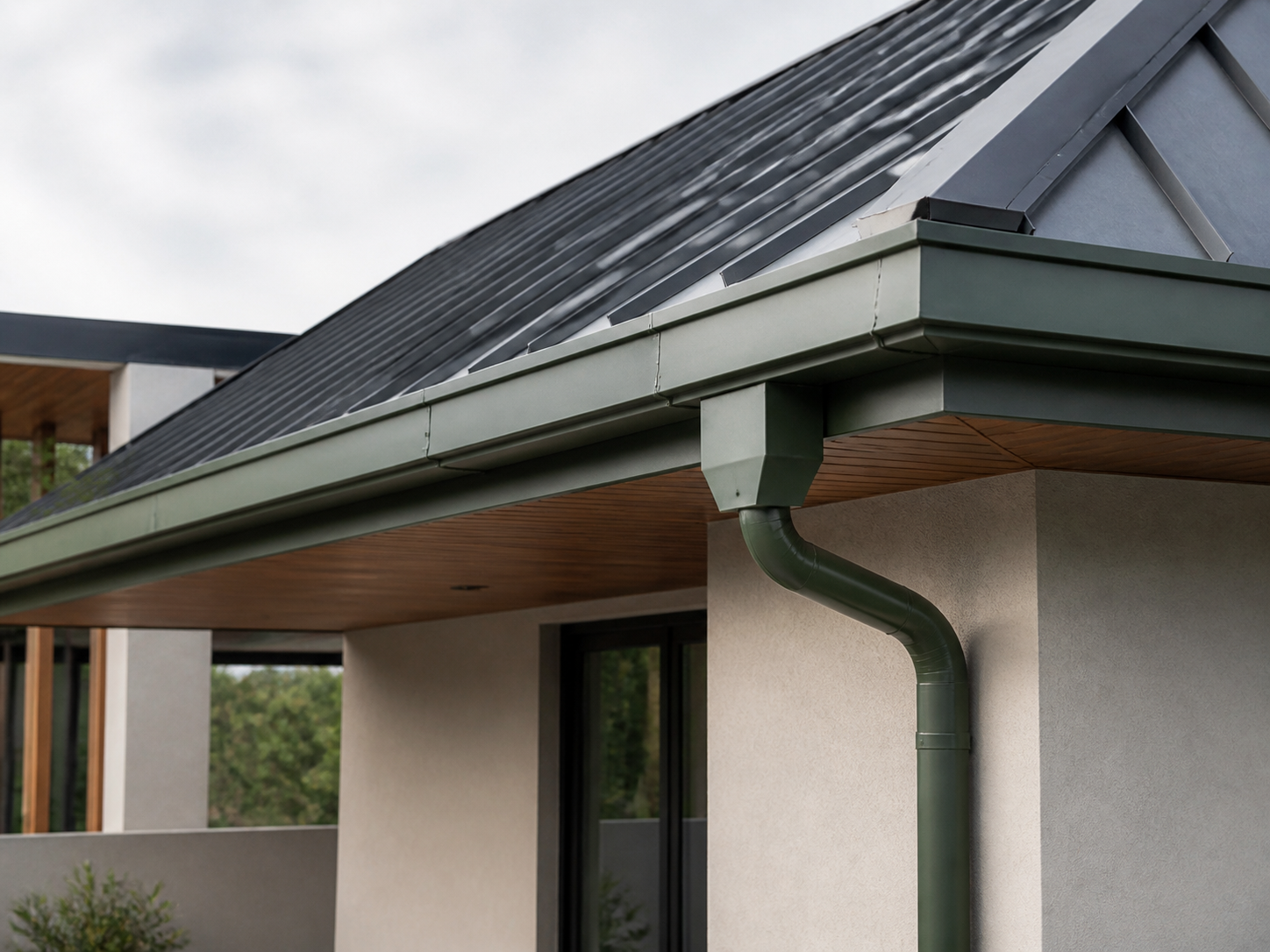
The gutter receives a roof catchment, not a line of water
Gutter selection starts with the roof area draining to each eave, local design rainfall, roof geometry and the available discharge route. A long gutter with too few outlets can overflow even when the profile looks generous. Valleys can concentrate water into a short section.
The RoofMyWorld calculator uses eave length and catchment depth to establish a planning area and indicative gutter run. Hydraulic sizing still requires rainfall intensity, outlet capacity, downpipe route and an overflow strategy.
Installation decisions that protect capacity
- Establish continuous fall and avoid back-falling sections
- Use the system’s bracket spacing and allow for full water load
- Place outlets where downpipes can discharge safely
- Allow thermal movement at joints and long runs
- Align the roof edge with the useful capture zone
- Provide visible, safe overflow paths
Material compatibility and maintenance
uPVC, FRP and metal gutter systems each have different joint, support and expansion requirements. Avoid contact between incompatible metals and use only approved seals or solvents. Leaves and construction debris reduce capacity, so accessible cleaning points and maintenance are part of the design.
Where should the water go?
Confirm whether water enters a stormwater line, harvesting tank, recharge system or safe surface discharge. Outlets should not saturate foundations, erode landscaping or create slippery circulation areas. Water-test the completed system before handover.
This guide consolidates ReZa Smart Build’s product catalogue, installation knowledge and legacy company material. Product attributes and availability must be reconfirmed at quotation stage.
View the related legacy ReZa listing ↗